A Framework for Analyzing Competitor Ads (With Worksheet)
Most competitor ad research ends in a folder of screenshots. Nobody opens the folder again.
The problem is not a lack of ads. It is that nobody decided in advance what they were looking for, so every ad looks interesting and none of them leads to a decision.
This is the framework we use. It has six things to record for each ad, one extra step for grouping, and a short write-up at the end. You can run it with a spreadsheet in an afternoon. A worksheet you can copy is further down.
Before you start: pick a question
Write one question at the top of the page. For example:
- What is the one promise our closest competitor keeps paying for?
- Which format is the category moving toward?
- What offer are people leading with this quarter?
A question stops you from collecting everything. It also tells you when you are done.
Then pick the scope. Three to five competitors is plenty for a first pass. Use the Meta Ad Library, filtered to active ads in your market. If you have not done that before, start with our guide to seeing competitors' Facebook ads.
The six fields
For each ad you want to analyze, record these.
1. Hook
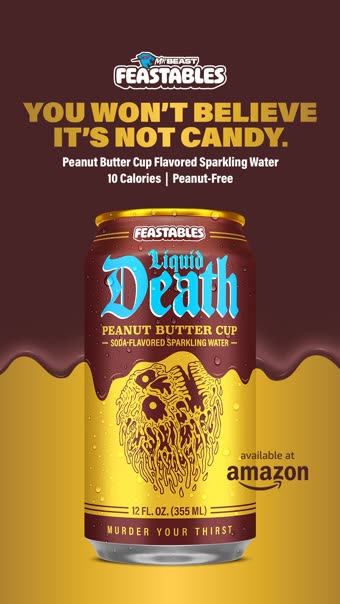
The hook is whatever the viewer gets in the first two seconds of a video or the first line of copy. Write it down in the advertiser's words. Then classify it.
Common hook types:
- A question ("Still doing X by hand?")
- A claim ("Our users lose 4 pounds in 30 days")
- A call-out of a person ("If you're a new mum...")
- A problem statement
- A result shown first
- A pattern interrupt, such as an odd visual or an unexpected line
Do not invent a taxonomy that has 40 types. Five or six is enough. The point is to see which type a brand reuses.
2. Angle
The angle is the reason to buy, stated as a belief. The hook gets attention. The angle is the argument.
Examples of angles are: saves time, saves money, is made with better ingredients, is trusted by experts, fixes a specific problem, helps you belong to a group, or removes risk.
A good way to write one: "Customers should buy because ___." If you cannot finish the sentence from the ad, note that too. It is useful to know that an ad has no clear argument.
3. Format
Record the format, plus a few details that change how an ad is made:
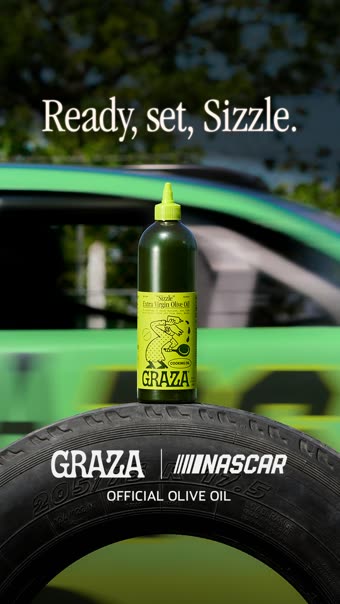
- Static image, video, carousel
- For video: length, whether a person is on camera, whether it looks native (phone footage) or produced
- Whether there are captions or text overlays
- Platform placements shown in the library
Format matters because it tells you what you would have to produce to compete.
4. Offer
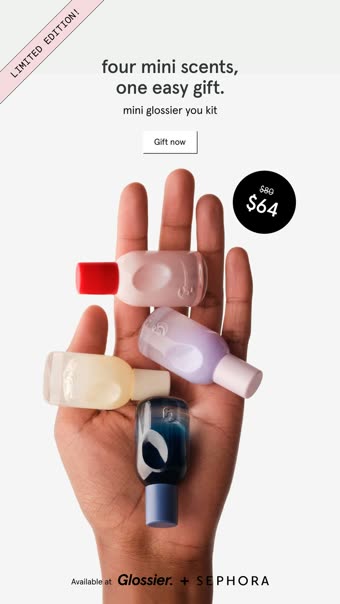
What is the commercial deal? A discount, free trial, free shipping, bundle, guarantee, limited-time claim or a free gift. Write the exact wording.
Then look across the brand's ads. Is the offer consistent, or does it change by ad? A brand that tests two offers will usually show both.
5. Landing page
Click through. Record where the ad sends people and what the first screen says.
Check three things. Does the page headline repeat the ad's promise? Is the page built for this ad (a quiz, a long-form page, a dedicated bundle) or is it a general product page? Is the offer on the page the same as the offer in the ad?
A matching, dedicated page suggests that the advertiser put real effort behind the idea.
6. Run time
Record the start date from the library and the date you looked. This is the closest public thing to a performance signal. It is also easy to over-read, so read our guide on finding the longest-running ads for the pitfalls.
The seventh step: group the copies
This is the step most frameworks skip, and it changes the results.
Brands run many copies of one idea. If you analyze 30 ads as 30 separate things, a single idea with 20 variations looks like 20 different bets. It is one bet, repeated.
Group ads that share the same hook, angle and visual into one idea. Then record a version count: how many ads belong to the idea. Also record the oldest start date and the newest, so you can see whether the idea is still being refreshed.
How to read the counts:
- 1 version, new. A test. Watch it, do not copy it.
- 1 version, old. Possibly an always-on or forgotten ad.
- Many versions, recent starts. The advertiser is actively iterating on this idea.
- Many versions across a long period. A core idea. This is the one to study.
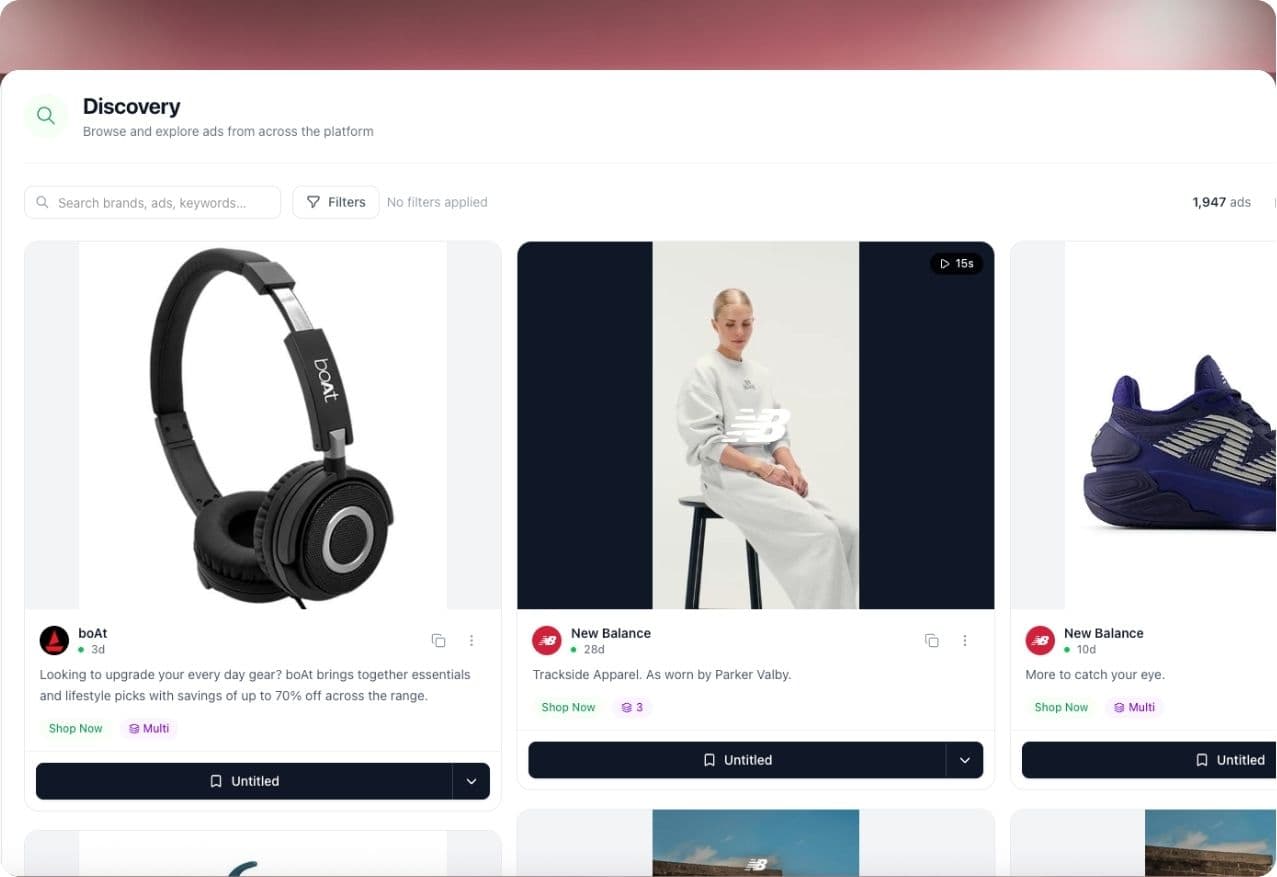
Seercraft does this grouping for you. It puts copies of one creative into a single idea and shows the version count.
The worksheet
Copy this into a sheet and add one row per idea, not per ad.
Question: ______________________________________
Market / country: ______________________________
Date checked: ___________________________________

IDEA #__
Brand / Page: ________________
Library ID(s): _______________ (list the oldest and newest)
Versions in this idea: ___
Oldest start date: ________   Newest start date: ________

Hook (exact words): _____________________________
Hook type: question / claim / call-out / problem / result / pattern interrupt
Angle ("buy because ..."): ______________________
Format: static / video / carousel   Length: ___
Native or produced: _____    Person on camera: Y / N
Offer (exact words): ____________________________
CTA button: _____________
Landing page URL: _______________________________
Page headline matches ad: Y / N     Built for this ad: Y / N

Fact (what is observable): ______________________
Inference (what you think it means): ____________
Confidence: low / medium / high
The last three lines are the most important ones. Keep facts and inferences in separate boxes. "This idea has 14 versions and the oldest started 150 days ago" is a fact. "This is probably their core angle" is an inference. When someone challenges your conclusion, you can show what it rests on.
Turn the worksheet into a read
Once you have 10 to 20 ideas across your competitors, answer five questions in plain sentences.
- Which angle shows up most? Count ideas, not ads.
- Which hook type do they favor? And is it the same across brands?
- Which format is gaining? Compare newer start dates with older ones.
- Which offers repeat? A discount in everything may mean the category competes on price. A guarantee in everything points to a trust problem.
- What is nobody saying? Gaps are as useful as patterns. If every competitor sells speed and nobody sells reliability, that is an open angle.
Then write the one-sentence summary per competitor: "They keep paying for ___, in ___ format, with ___ offer."
Common mistakes
- Analyzing ads you like instead of ads that ran. Start from run time and repetition, not taste.
- Treating copies as separate ideas. Group first.
- Ignoring the landing page. The ad is half of the funnel.
- Reading spend into what you see. The Ad Library does not show spend or ROAS for commercial ads, and nobody outside Meta has it. Do not guess at it.
- Skipping the date. Without "as of" dates, your notes cannot be compared next month.
- Stopping at observation. The output of the framework is a decision about what to test. See how to turn it into a creative brief.
Doing it without the spreadsheet
The worksheet works. It is slow, and the evidence disappears when an advertiser turns an ad off, because ordinary commercial ads leave the Meta Ad Library once they stop.
In Seercraft, competitor tracking checks the brands you follow every day and keeps history after ads stop. Copies of one creative are grouped into an idea with a version count. Seer, our AI analyst, writes a cited read of each brand. You can also ask it questions with ⌘J in the app. Every claim links to the ads behind it, and inferences are labelled as inferences, which is the fact and inference split from the worksheet, done for you. For the full picture, see AI ad analysis.
Agencies running this across many clients can read how that works on our agencies page. In-house teams can start from the brands page.
Sources
- Archived Ad reference, fields (Meta for Developers)
- Meta Ad Library tools (Meta Transparency Center)
- What is the Meta Ad Library and how do I search it? (Meta Help Center)
Add a competitor and start your free trial and see your first competitor's ads grouped into ideas. Every subscription includes a 7-day free trial; see our pricing page for current plans and limits.